Odoo Erp system

Odoo erp-all in one solution

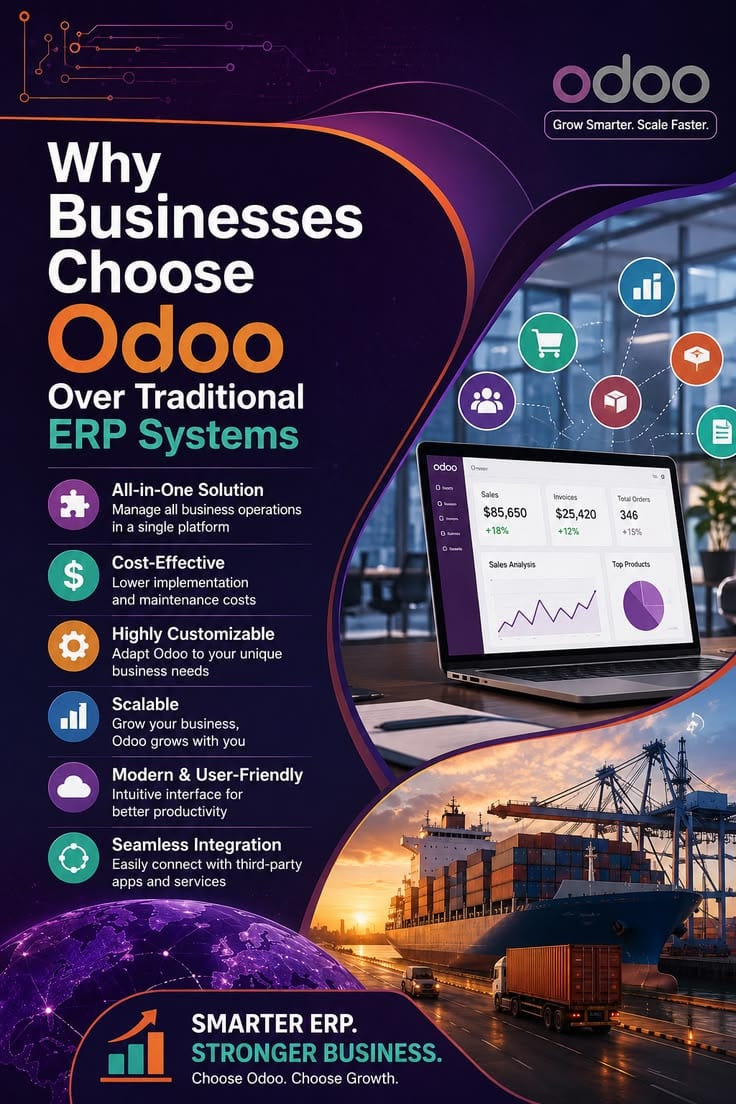
Odoo is an all-in-one business management system (ERP). It goes beyond accounting by connecting accounting with sales, purchasing, inventory, manufacturing, HR, CRM, POS, and other business operations.

Odoo ERP is an integrated Enterprise Resource Planning (ERP) system that helps organizations manage business operations through a collection of interconnected applications. It is available in both Community (open-source) and Enterprise (commercial) editions and is used by businesses of all sizes.


Key FeaturesModular architecture (install only the applications you need)

Integrated business processes across departments

Web-based and cloud/on-premises deployment

User-friendly interface

Mobile accessibility

Customizable workflows

Multi-company support

Multi-currency and multi-language support

Role-based user access

Real-time reporting and dashboards

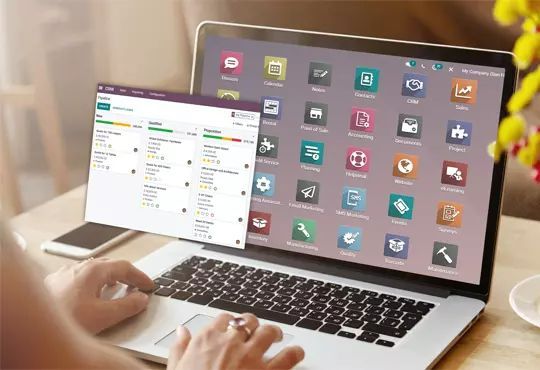
Odoo ERP Modules

Sales

Quotations and sales orders

Customer management

Pricing and discounts

Sales analytics

Product catalogs

CRM (Customer Relationship Management)

Lead management

Opportunity tracking

Sales pipeline

Customer communication history

Forecasting

Purchase

Supplier management

Purchase requests

Purchase orders

Vendor price lists

Procurement tracking

Inventory

Stock management

Warehouse management

Barcode support

Batch and serial number tracking

Stock transfers

Inventory valuation

Accounting

General ledger

Accounts payable

Accounts receivable

Bank reconciliation

Tax management

Financial statements

Budget management

Manufacturing (MRP)

Bills of Materials (BOM)

Work orders

Production planning

Quality control

Maintenance integration

Human Resources (HR)

Employee records

Recruitment

Attendance

Leave management

Payroll

Performance appraisal

Employee expenses

Project Management

Project planning

Task management

Time tracking

Resource allocation

Gantt charts

Helpdesk

Customer support tickets

Service Level Agreements (SLAs)

Ticket assignment

Customer portal

Knowledge base

Point of Sale (POS)

Retail sales

Barcode scanning

Receipt printing

Multiple payment methods

Offline operation

Website & eCommerce

Website builder

Online store

Product management

Shopping cart

Online payments

SEO tools

Marketing

Email marketing

SMS marketing

Social media management

Marketing automation

Event management

Surveys

Field Service

Job scheduling

Technician management

Route planning

Mobile work orders

Customer signatures

Documents

Document storage

File sharing

Version control

Approval workflows

Maintenance

Preventive maintenance

Corrective maintenance

Equipment tracking

Maintenance scheduling

Quality

Quality inspections

Control points

Non-conformance management

Quality reports

Industries Supported


Odoo can be adapted for a wide range of industries, including:


Retail

Wholesale and distribution

Manufacturing

Healthcare

Construction

Education

Hospitality

Logistics and transportation

Agriculture

Professional services

Non-profit organizations

Benefits

Centralized business data

Reduced manual processes

Improved operational efficiency

Better collaboration between departments

Real-time reporting and analytics

Scalable as the business grows

Customizable to business requirements

Integration with third-party applications

Lower implementation costs compared to many traditional ERP systems

Deployment Options

Cloud (SaaS): Hosted by Odoo.

On-premises: Installed on the organization's own servers.

Private cloud: Hosted by a third-party cloud provider.

Typical Business Workflow

A customer inquiry is recorded in the CRM.

A quotation is created and sent.

The quotation is confirmed as a sales order.

Inventory is checked and products are reserved.

A purchase order is generated if stock is insufficient.

Goods are delivered to the customer.

An invoice is issued and payment is recorded.

Financial reports are updated automatically.

Advantages

Comprehensive suite of integrated business applications

Easy to extend with custom modules

Strong automation capabilities

Large ecosystem of community and third-party modules

Suitable for startups, SMEs, and large enterprises

Odoo Erp system
Built for
Healthcare
Modules included
3

What is inside Odoo Erp system

Each module runs on its own and shares the same data, so you can start with what you need today and switch the rest on later.

Records Security

Encrypted storage with role-based access and audit logging.

High-Availability Networks

Redundant links so critical systems stay reachable.

Backup & Recovery

Verified backups with tested restore procedures.

How we deliver it

The Challenge

 Challenges Discovered in Manual Business Operations

Many businesses still rely on spreadsheets, paperwork, separate systems and manual processes to manage their daily operations. While these methods may work when a business is small, they become increasingly difficult to manage as the business grows.

1. Poor Data Management

Important business information is stored in different files, books and spreadsheets, making it difficult to maintain accurate and up-to-date records.

2. Duplicate Data Entry

Employees often enter the same information multiple times across different records. This wastes time and increases the risk of errors.

3. Limited Financial Visibility

Management may struggle to get a clear, real-time picture of sales, expenses, receivables, payables, cash flow and profitability.

4. Stock Management Problems

Manual stock records can result in inaccurate inventory balances, stock-outs, overstocking, wastage and unexplained stock losses.

5. Slow Sales Processing

Manual quotations, sales orders, invoices and receipts can slow down the sales process and increase administrative workload.

6. Difficult Procurement Management

Tracking purchase requests, purchase orders, suppliers, deliveries and supplier invoices manually can lead to delays and missed information.

 7. Poor Customer & Supplier Tracking

Customer balances, supplier payments, transaction history and outstanding invoices can be difficult to monitor when records are scattered across different files.

8. Lack of Real-Time Reports

Management often has to wait for staff to compile reports manually before making important business decisions.

9. Departmental Disconnect

Sales, purchasing, inventory, accounting, manufacturing and management may operate independently, making it difficult to share accurate information across departments.

10. Increased Human Errors

Manual calculations and data entry increase the possibility of incorrect prices, quantities, invoices, stock balances and financial records.

11. Poor Accountability

It can be difficult to determine who created, edited or approved a transaction when processes are handled through physical documents or shared spreadsheets.

12. Time-Consuming Reconciliation

Reconciling sales, payments, bank transactions, stock and accounts manually consumes valuable time and can delay financial reporting.

13. Difficulty Managing Growth

As transaction volumes increase, manual systems become harder to control, making business expansion more complicated and expensive.

14. Scattered Business Information

Management may need to check several files, systems or departments just to obtain one complete view of the business.

The Need for an Integrated Solution

These challenges demonstrate the need for an integrated business management system that connects different departments and processes in one platform.

Odoo helps businesses bring Sales, Accounting, Inventory, Purchase, Manufacturing, CRM, HR and other operations together, providing a centralized system for managing the entire business.**


### From Manual Operations to Integrated Business Management


**Manual Processes → Odoo Automation → Better Control → Better Decisions → Business Growth**


Our Approach

 Challenges Discovered in Manual Business Operations


Many businesses still rely on spreadsheets, paperwork, separate systems and manual processes to manage their daily operations. While these methods may work when a business is small, they become increasingly difficult to manage as the business grows.


 1. Poor Data Management


Important business information is stored in different files, books and spreadsheets, making it difficult to maintain accurate and up-to-date records.


2. Duplicate Data Entry


Employees often enter the same information multiple times across different records. This wastes time and increases the risk of errors.


### 3. Limited Financial Visibility


Management may struggle to get a clear, real-time picture of sales, expenses, receivables, payables, cash flow and profitability.


### 4. Stock Management Problems


Manual stock records can result in inaccurate inventory balances, stock-outs, overstocking, wastage and unexplained stock losses.


### 5. Slow Sales Processing


Manual quotations, sales orders, invoices and receipts can slow down the sales process and increase administrative workload.


### 6. Difficult Procurement Management


Tracking purchase requests, purchase orders, suppliers, deliveries and supplier invoices manually can lead to delays and missed information.


### 7. Poor Customer & Supplier Tracking


Customer balances, supplier payments, transaction history and outstanding invoices can be difficult to monitor when records are scattered across different files.


### 8. Lack of Real-Time Reports


Management often has to wait for staff to compile reports manually before making important business decisions.


### 9. Departmental Disconnect


Sales, purchasing, inventory, accounting, manufacturing and management may operate independently, making it difficult to share accurate information across departments.


### 10. Increased Human Errors


Manual calculations and data entry increase the possibility of incorrect prices, quantities, invoices, stock balances and financial records.


### 11. Poor Accountability


It can be difficult to determine who created, edited or approved a transaction when processes are handled through physical documents or shared spreadsheets.


### 12. Time-Consuming Reconciliation


Reconciling sales, payments, bank transactions, stock and accounts manually consumes valuable time and can delay financial reporting.


### 13. Difficulty Managing Growth


As transaction volumes increase, manual systems become harder to control, making business expansion more complicated and expensive.


### 14. Scattered Business Information


Management may need to check several files, systems or departments just to obtain one complete view of the business.


## The Need for an Integrated Solution


These challenges demonstrate the need for an integrated business management system that connects different departments and processes in one platform.


**Odoo helps businesses bring Sales, Accounting, Inventory, Purchase, Manufacturing, CRM, HR and other operations together, providing a centralized system for managing the entire business.**


### From Manual Operations to Integrated Business Management


**Manual Processes → Odoo Automation → Better Control → Better Decisions → Business Growth**


The Outcome

Facilities operate with dependable systems, protected records and a support desk familiar with clinical urgency.

See Odoo Erp system in action

Book a free walkthrough and we will show you the system running with your own products, prices and reports.