Business systems guide
Why Choose Odoo ERP? A Practical Guide for Growing Businesses
SA
System Administrator
Super Administrator
5 views
Most growing businesses hit the same wall. Sales lives in one tool, inventory in a spreadsheet, accounting in another system, and HR on paper. Nothing talks to anything else, and every report means hours of copying and reconciling data. An ERP (Enterprise Resource Planning) system fixes this by putting your core operations on one platform. Odoo is one of the most popular choices, and here is why.
1. One platform, all your core processes
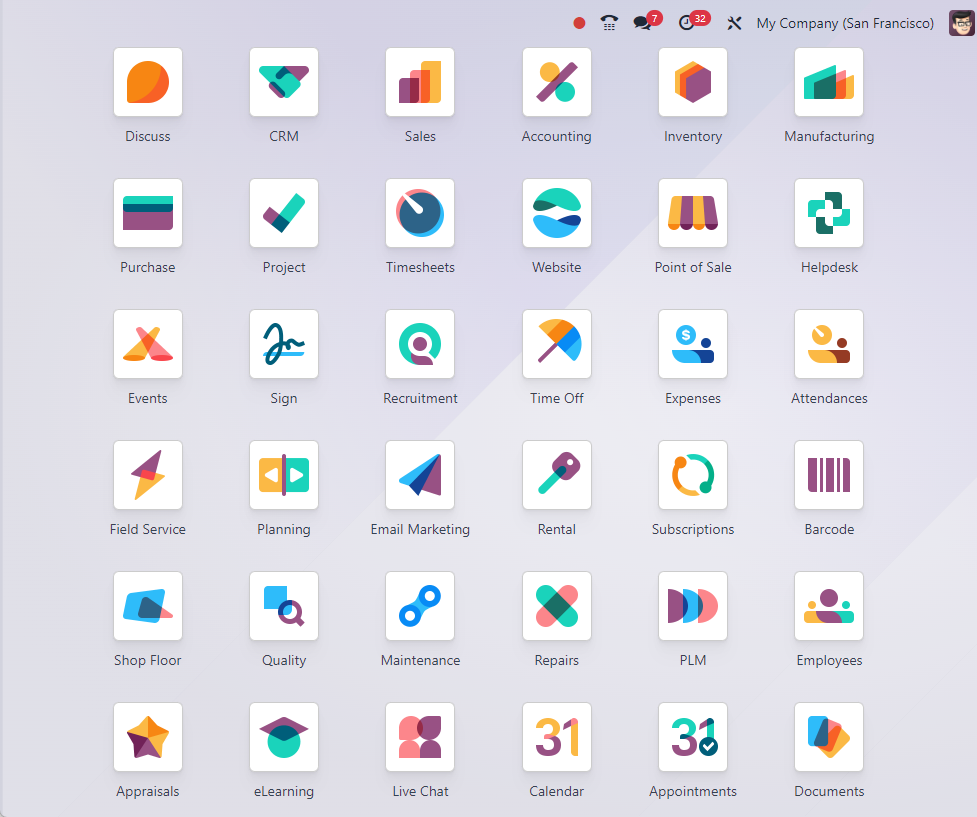
Odoo is built as a suite of integrated apps covering:
Sales and CRM: leads, quotations, orders
Inventory and purchasing: stock levels, warehouses, suppliers
Accounting and invoicing: billing, payments, financial reports
Manufacturing: bills of materials, work orders, planning
HR: employees, leave, recruitment, payroll (depending on region)
Website, eCommerce and POS: sell online and in-store from the same data
Project management and helpdesk: track work and support requests
Because the apps share one database, a sale automatically updates stock, triggers an invoice, and shows up in your financial reports. No double entry.
2. Start small, scale as you grow
Odoo is modular. You can begin with just CRM and invoicing, then add inventory, manufacturing, or HR when you need them. You pay for and manage only what your business uses today, rather than committing to a huge system on day one. This makes it practical for small and mid-size companies without giving up room to grow.
3. Flexible and customizable
Every business works a little differently. Odoo lets you adapt fields, workflows, reports, and automations, and when you need more, developers can build custom modules. Odoo also has a large ecosystem of third-party apps and implementation partners, so you are rarely starting from scratch.
4. Open-source foundation
Odoo offers a Community edition that is open source and an Enterprise edition with additional features and official support. The open-source roots mean a large global community, plenty of documentation, and less risk of being locked into a single vendor’s way of doing things.
5. Choice of deployment
You can run Odoo in the cloud (Odoo Online or Odoo.sh) or host it yourself on your own servers. That helps businesses with specific data, compliance, or connectivity needs, and it gives you room to change your setup later.
6. A modern, user-friendly interface
ERP systems have a reputation for being clunky. Odoo’s interface is clean and relatively easy to learn, which matters because the best ERP is the one your team actually uses. Easier adoption means faster training and quicker returns.
7. Better visibility for better decisions
With sales, stock, finance, and operations in one place, you get real-time dashboards and reports. You can see which products make money, where cash is tied up, and what is delayed, without waiting for month-end spreadsheets.
8. Cost-effective compared with many alternatives
Odoo is generally more affordable than large enterprise ERPs, especially for smaller companies, and the modular approach avoids paying for unused functionality. Check Odoo’s current pricing and compare the total cost, including implementation, customization, and support, not just the licence.
Things to consider before you commit
No system is perfect, and a good decision means looking at the trade-offs:
Implementation quality matters. Odoo’s results depend heavily on a good implementation partner who understands your processes.
Heavy customization has a cost. Extensive custom work can make future upgrades more complex.
Plan for change management. Training and getting your team on board are as important as the software.
Is Odoo right for you?
Odoo is a strong fit if you are a small or mid-size business that wants integrated operations, room to grow, and the flexibility to adapt the system to how you work. Map your key processes first, shortlist your must-have features, and run a demo or pilot before deciding.
Ready to explore Odoo for your business? Contact us for a free consultation and see how it could streamline your operations.
If you tell me your audience (manufacturers, retailers, services), your company name, or the tone you want, I can tailor this, add an SEO title and meta description, or make it shorter for LinkedIn. And if you’re planning to sell Odoo services, I can still draft that cold outreach email once you share your target and hook.